

Blog
5 Stunning Rules to Identify Water Safe Crystals for Jewelry
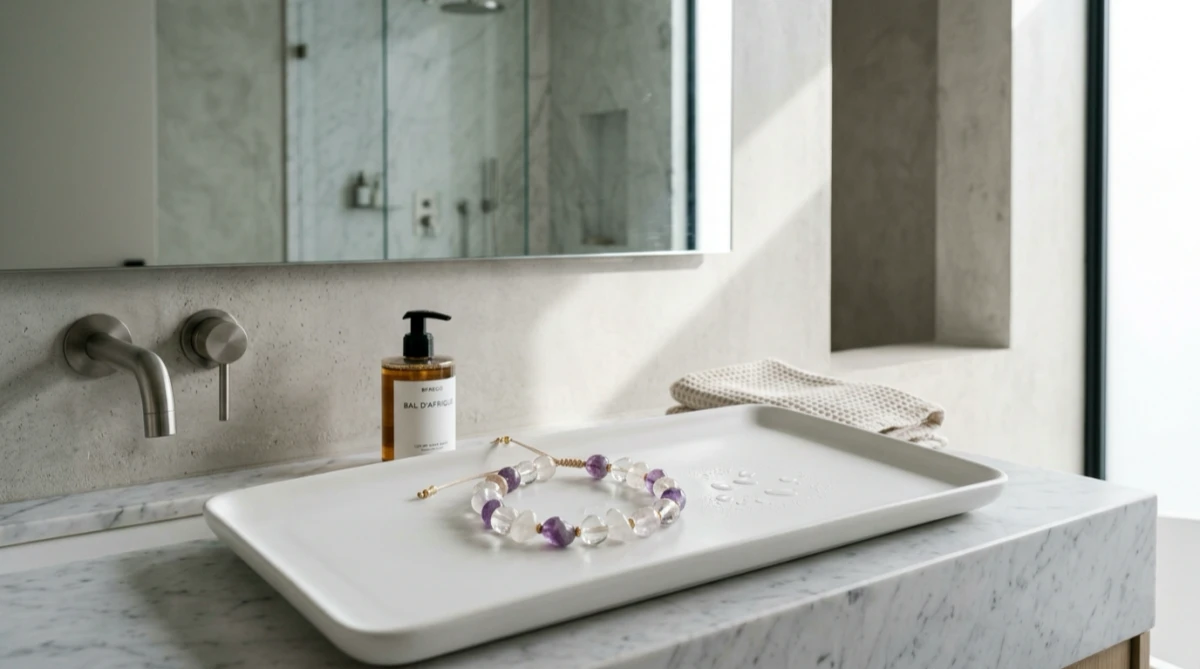
In the contemporary executive landscape, fine jewelry has evolved beyond simple ornamentation into a personal sanctuary of energetic alignment. When I hand-assemble gemstone strands in our studio, selecting each premium mineral for its structural and vibrational integrity, longevity remains at the forefront of our craft. For many dedicated collectors, understanding which specimens qualify as water safe crystals is the ultimate foundational knowledge required to preserve a high-end luxury collection.
A frequent dilemma shared by many individuals visiting our workshop centers on a common daily routine: can you wear crystal bracelets in the shower? While the cleansing properties of water feel metaphysically intuitive, the raw geological reality is that moisture can cause permanent, irreversible damage to delicate earth elements. By analyzing the exact mineralogical parameters of your stones, you can effortlessly implement a sustainable routine that honors both aesthetics and geology.
The Structural Parameters of Water Safe Crystals
To safely determine the boundaries of your collection, we look to established scientific standards. The primary rule of thumb in our studio relies strictly on the [Outbound Link: Crystal Hardness Scale Guide], which classifies raw minerals based on their scratch resistance. Generally, authentic stones that score a 7 or higher on this geological matrix are considered resilient enough to be classified as water safe crystals under controlled settings.
However, physical hardness is only half the battle when evaluating fine jewelry. Many striking minerals contain high concentrations of iron compounds or copper bases that oxidize rapidly upon contact with ambient humidity. Porous gemstones will absorb trace moisture and environmental pollutants, leading to deep internal fracturing and severe discoloration. True luxury preservation requires a profound respect for these underlying molecular realities.
Gemstone Stability and Dissolution Matrix
To assist you in curating your daily styling combinations, I have compiled our studio’s classification summary detailing how popular healing stones interact with moisture and everyday lifestyle conditions:
| Gemstone Family | Mohs Hardness | Chemical Vulnerability | Water Safe Crystals Status |
|---|---|---|---|
| Clear Quartz & Amethyst | 7.0 | Silica Base (Highly Inert) | Verified Safe (Pure Water Only) |
| Rose Quartz | 7.0 | Silica Base (Highly Inert) | Verified Safe (Pure Water Only) |
| Lapis Lazuli | 5.0 – 5.5 | Porous Pyrite Inclusions | Strictly Unsafe (Prone to Dullness) |
| Malachite | 3.5 – 4.0 | High Copper Carbonate | Strictly Unsafe (Toxic in Water) |
| Selenite | 2.0 | Hydrous Calcium Sulfate | Strictly Unsafe (Dissolves Completely) |
Why Elastic Architecture Changes Crystal Bracelet Care
Even when a piece consists entirely of certified water safe crystals, the fine construction of compiled jewelry introduces separate structural risks. Modern luxury bracelets rely on specialized elastic polymers or coated metallic threads to maintain their sleek drape. Repeated exposure to warm water and the synthetic surfactants present in luxury soaps directly accelerates the brittle snapping of these internal elastic fibers.
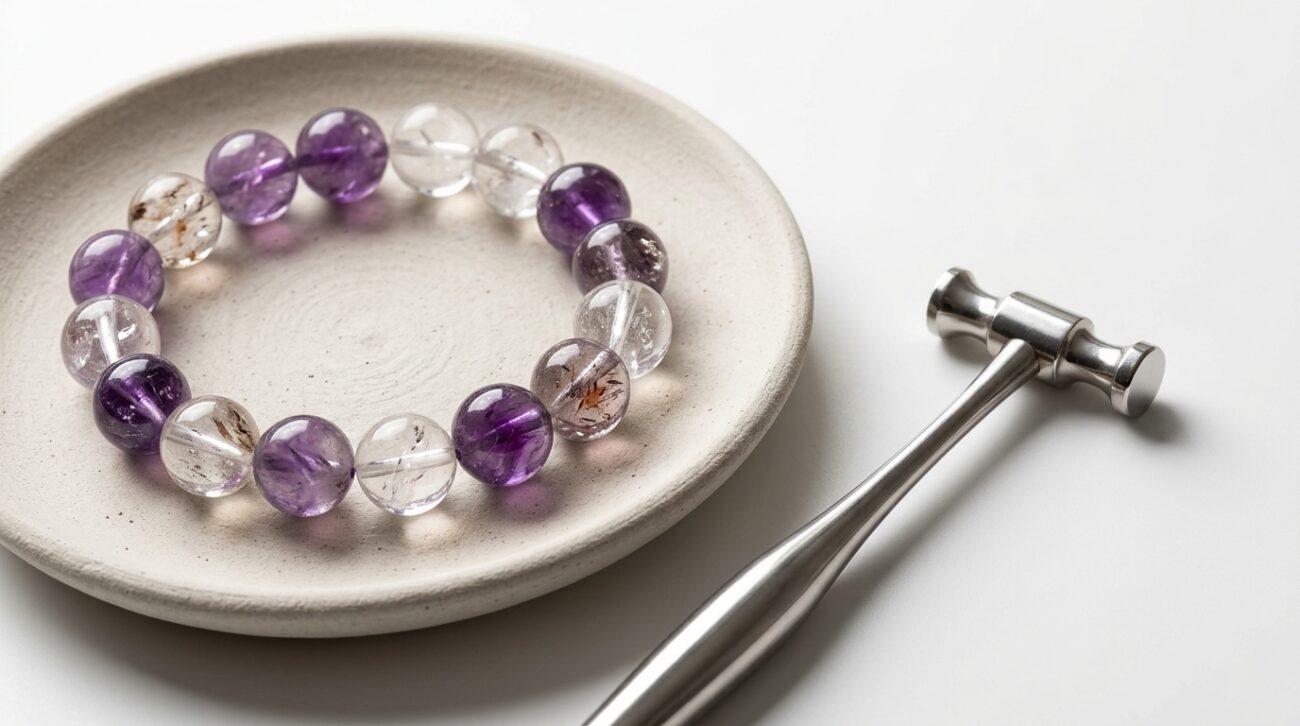
Furthermore, standard tap water contains dissolved minerals that leave a dull, calcified film over high-clarity quartz beads, permanently masking their natural internal inclusions and subtle golden rutiles. In our studio, we practice a philosophy of preventative maintenance. Removing your pieces prior to entering any high-moisture environment is the single most effective step you can take to ensure the structural architecture remains flawless for decades.
Advanced Techniques for Safe Mineral Purification
If your primary goal is resetting the energetic frequency of your fine jewelry, running water is far from the safest alternative. The gold standard for maintaining both delicate cords and water safe crystals involves utilizing dry, static mineral fields. Placing your worn strands onto a solid charging plate carved from genuine selenite or resting them on a dedicated bed of clear quartz chips provides a pristine, moisture-free reset.
For routine physical upkeep, a clean, completely dry microfiber cloth is your most efficient tool. Gently polishing the surface of each individual bead clears away daily skin oils and pollutants without trapping moisture inside the drilled drill holes where damage typically begins. Treating these natural elements with the meticulous attention reserved for fine art preserves their innate brilliance forever.
Frequently Asked Questions
Can you wear crystal bracelets in the shower if they are quartz?
Even though natural quartz varieties are classified as water safe crystals, you should not wear them in the shower. The exposure to chemical surfactants in modern shampoos and the thermal expansion from warm water will rapidly degrade the internal elastic cord, leading to unexpected breakage.
How can I tell if a new gemstone is safe for water exposure?
Consult the Mohs Hardness Scale as your primary guide. Any mineral scoring below a 5, or any stone featuring metallic inclusions (such as copper or iron bases), is strictly unsafe for liquid immersion and must be kept completely dry to avoid structural decay.
What is the best way to clean sweat from lifestyle crystal jewelry?
To safely clear away residue after a workout or a long day, wipe the gemstone beads down using a soft cloth slightly dampened with pure water. Immediately buff the entire piece dry with a fresh microfiber towel to eliminate any lingering moisture near the cord holes.


