

Blog
Real vs Fake Crystals: How to Spot Authentic Natural Crystals from Synthetic Glass
When clients visit our studio to select a gemstone bracelet or necklace, one concern appears again and again: real vs fake crystals. The market is filled with polished glass imitations that resemble genuine minerals at first glance, making it difficult to know what you are truly buying. As an independent crystal jewelry designer and metalsmith, I spend hours hand-selecting stones, and learning how to recognize real vs fake crystals is one of the most valuable skills for any thoughtful collector.
Whether you are purchasing a daily talisman or searching for a meaningful gift, understanding the visual language of authentic gemstones helps protect both your investment and intention.
Why the Difference Between Real vs Fake Crystals Matters
Luxury crystal jewelry begins with materials that possess genuine mineral character. Authentic natural crystals form through geological pressure and time, while imitation stones are commonly mass-produced from glass, dyed resin, or laboratory-created composites.
In our studio, I often notice customers initially focus on color. Yet the truth behind real vs fake crystals usually appears in texture, temperature, weight, and internal structure.
Natural stones rarely appear visually perfect. Tiny inclusions, mineral veining, soft clouding, or subtle tonal shifts are often signs of authenticity rather than flaws.
| Feature | Authentic Natural Crystals | Synthetic Glass Imitations |
|---|---|---|
| Surface Texture | Subtle mineral texture with natural variation | Overly smooth or unnaturally uniform |
| Temperature | Feels cool when first touched | Warms quickly in the hand |
| Internal Appearance | Natural inclusions or soft imperfections | Air bubbles or perfectly clean interiors |
| Weight | Usually denser and slightly heavier | Often lighter depending on material |
| Color Pattern | Gentle variation and layered depth | Artificially bright or overly consistent |
For a deeper gemstone reference, I recommend reviewing the Gem Encyclopedia by GIA, one of the most trusted educational resources for gemstone identification.
Real vs Fake Crystals: 5 Designer Tests I Personally Use
After years of sourcing gemstones for natural crystal jewelry, I rely on several simple observations before approving stones for production.
1. Observe Internal Imperfections
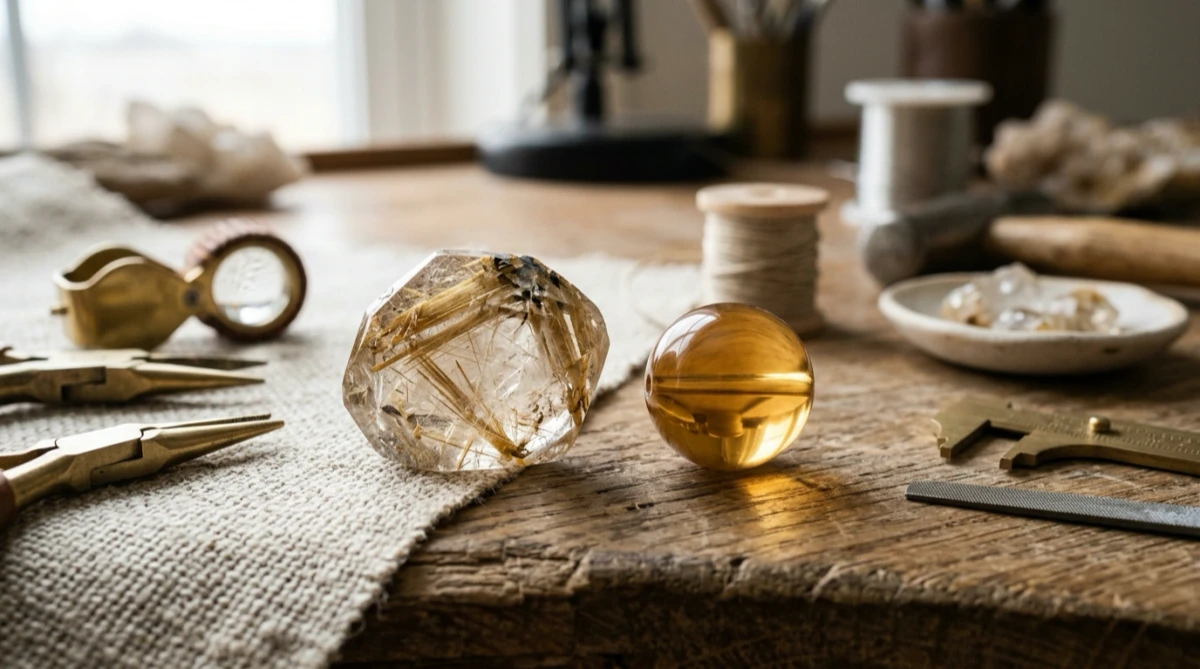
One of the easiest ways to evaluate real vs fake crystals is by studying the interior. Authentic minerals often contain wispy inclusions, mineral fractures, or naturally uneven clarity.
If a crystal appears flawless to an almost plastic degree, I become cautious. Exceptionally clear natural stones certainly exist, but perfection at unusually low prices often signals imitation.
2. Look for Tiny Air Bubbles
Glass imitations commonly reveal round air bubbles under bright light. In genuine crystals, inclusions usually look irregular, layered, or naturally scattered rather than perfectly circular.
A jeweler’s loupe or your phone flashlight can make this difference much easier to identify.
3. Feel the Temperature Difference
Authentic natural crystals generally feel cool when first placed against the skin. Glass often adjusts to body temperature more quickly.
Although this method is not perfect on its own, I frequently combine it with visual inspection when assessing real vs fake crystals.
4. Examine Color Consistency
Natural minerals tend to display subtle shifts in saturation and translucency. When a stone appears intensely saturated with identical coloring throughout, dye enhancement or synthetic material may be involved.
For premium jewelry, I often prefer gemstones with quiet complexity rather than dramatic perfection.
5. Ask About Stone Origin
Trustworthy brands should explain where materials originate and whether treatments have been applied. Transparency matters when investing in meaningful jewelry.
In our studio, I document sourcing carefully because clients investing in authentic natural crystals deserve clarity.
How to Tell If a Crystal Is Real Before Buying Jewelry
If you are shopping online, product photography alone rarely tells the full story. I recommend examining three signals before making a purchase:
- Clear material descriptions instead of vague “healing stone” language
- Close-up images showing natural texture or inclusions
- Transparent sourcing and craftsmanship information
Learning how to tell if a crystal is real becomes easier once you stop searching for perfection and begin noticing geological character.
Explore our most-loved designs in our best-selling crystal jewelry collection, featuring carefully sourced natural gemstones crafted with a minimalist aesthetic.
The Quiet Beauty of Authentic Stones
In luxury jewelry, authenticity feels visible. Genuine gemstones carry a calm sense of individuality that machine-made materials rarely replicate.
When I hand-assemble gemstone strands, I intentionally leave room for subtle imperfections because they reveal the story of formation rather than imitation. Understanding real vs fake crystals is not simply about avoiding synthetic glass. It is about choosing materials with texture, presence, and meaning.
FAQ: Real vs Fake Crystals
How can I tell if my crystal is real or glass?
Check for air bubbles, unnatural color uniformity, and surface texture. Authentic natural crystals often contain subtle inclusions and feel cooler to the touch than glass.
Are fake crystals used in luxury jewelry?
Some brands use glass or dyed materials while still presenting products as gemstone jewelry. Reviewing sourcing transparency and close-up imagery helps identify quality.
Which crystals are most commonly faked?
Quartz varieties, citrine, turquoise, and obsidian are frequently imitated because their colors are commercially attractive and easy to reproduce in glass.


